Lethbridge Long-Term Disability Lawyers
Get legal answers now. Speak to our lawyers.
Speak with our Lethbridge long-term disability lawyers and get legal answers to your long-term disability questions.

Book a FREE Call
Tell us what happened
Let us help.
Do you live in Lethbridge? Here’s how we can help:
Table of Contents
Published: July 16, 2024 | Last Reviewed: September 10, 2026
Living with a serious illness, injury, or disabling medical condition can affect nearly every part of your life. If your health prevents you from working, long-term disability benefits may provide important financial support while you focus on treatment and recovery. But when an insurer denies your claim, terminates benefits, or tells you that you are capable of returning to work, the process can quickly become stressful and confusing.
Our Lethbridge long-term disability lawyers at Preszler Injury Lawyers may be able to help you understand your insurance policy, the reasons for the insurer’s decision, and the options available to challenge a denial or termination of benefits. Long-term disability disputes can involve complicated policy language, detailed medical evidence, changing definitions of disability, and important deadlines.
If you have questions about an LTD claim in Lethbridge or elsewhere in Alberta, our legal team can review your circumstances and explain the next steps that may be available.
Get in touch with our team today by filling out our online contact form or calling us at 1-888-494-7191. Available 24/7.
Key Takeaways About Long-Term Disability Claims In Lethbridge
- Long-term disability disputes in Lethbridge often turn on how an insurer interprets the wording of the policy and whether the medical evidence shows that a claimant can still perform the duties of their occupation.
- A claim can become more difficult when symptoms such as chronic pain, fatigue, cognitive problems, depression, or anxiety are not easily measured through objective testing.
- Insurers may reassess eligibility even after benefits have been approved, particularly when updated medical information is requested or the policy moves from an “own occupation” test to an “any occupation” test.
- The quality of the evidence can be critical. Medical records, specialist opinions, treatment history, functional limitations, and a clear description of the claimant’s actual work duties may all affect how the claim is evaluated.
- A denial letter should be reviewed carefully because it may identify gaps in the insurer’s view of the evidence, outline an internal appeal process, and raise important timing issues.
- An internal appeal is not the same as starting a legal claim, and Alberta limitation periods may still be relevant while discussions with the insurer continue.
- Lethbridge long-term disability lawyers can help assess the policy, the insurer’s reasons for denying or ending benefits, and the evidence that may be needed to challenge that decision.
Let us put our experience to work for you
Tell Us What Happened
We are here to help Albertans get the compensation and benefits they deserve after being injured in an accident. We take this responsibility very seriously. Book your free call with our personal injury lawyers today and let us help you.
Our phone lines are open 24/7.

When Should You Speak With Lethbridge Long-Term Disability Lawyers?
A long-term disability claim can become complicated well before an insurer formally denies benefits. You may be asked for additional medical records, required to attend an assessment, told that your treatment is insufficient, or advised that your benefits will end because the insurer believes you can return to work.
Speaking with Lethbridge long-term disability lawyers may help you understand what your insurance policy requires and what options may be available when your benefits are denied or terminated.
Every LTD policy is different. The wording of your policy can determine how disability is defined, what evidence you must provide, how long benefits may be payable, whether other income sources affect your payments, and when the insurer can reassess your eligibility.
If you have received a denial or termination letter, it is important to review both the insurer’s reasons and the terms of your policy carefully.
Why Long-Term Disability Claims May Be Denied In Lethbridge
An insurer may deny an LTD claim even when a person has been unable to continue working. A denial does not necessarily mean your medical condition is not serious. Often, the dispute concerns whether the available evidence satisfies the particular definition of disability in the insurance contract.
Common issues can include an insurer taking the position that the medical evidence does not establish sufficient functional limitations, that your condition does not prevent you from performing the essential duties of your occupation, or that you have not pursued recommended treatment.
An insurer may also argue that objective medical testing does not support your symptoms, that you can perform modified or alternative work, that your condition falls within an exclusion or limitation, or that you no longer satisfy the policy’s definition of disability.
Claims involving conditions such as fibromyalgia, chronic pain, depression, anxiety, post-traumatic stress disorder, migraines, and other illnesses without a single definitive diagnostic test can involve particular evidentiary challenges.
What matters is often not simply the name of the diagnosis, but how the condition affects your ability to function consistently and perform the duties required by your occupation.
What Does “Total Disability” Mean Under An LTD Policy In Lethbridge?
Being considered “totally disabled” for insurance purposes does not necessarily mean that you must be completely incapable of performing every activity.
The applicable test depends on the wording of your particular policy.
Many LTD policies initially assess whether your medical condition prevents you from performing the important duties of your own occupation. After a specified period, often around two years, the policy may change to a broader test that considers whether you are capable of performing another occupation for which you may be reasonably suited by factors such as your education, training, or experience.
This change can become a significant point of dispute in an LTD claim. An insurer may accept that you cannot return to your former job but nevertheless take the position that you are capable of different employment.
When reviewing that position, relevant considerations may include your medical restrictions, functional abilities, education, employment history, transferable skills, earnings potential, and the actual requirements of any proposed alternative occupation.
What Evidence Can Support A Long-Term Disability Claim In Lethbridge?
Medical records are important in an LTD claim, but they are only one part of the evidence that may be relevant.
A strong disability file may include information showing both the nature of your condition and its practical impact on your ability to work. Depending on the circumstances, this can include:
- Specialist reports
- Family physician records
- Diagnostic imaging
- Medication history
- Treatment records
- Rehabilitation reports
- Psychological or psychiatric assessments
- Occupational therapy records
- Functional testing
- And more
Your employment information can also be important. A detailed description of your actual job duties can help establish why your restrictions prevent you from performing your occupation. Job titles alone do not always provide an accurate picture of the physical, cognitive, interpersonal, or scheduling demands of a position.
For example, a person may technically work in an office but still be required to concentrate for prolonged periods, meet strict deadlines, manage complex information, interact continuously with clients, or maintain consistent attendance. Symptoms such as fatigue, cognitive impairment, chronic pain, medication side effects, or mental health conditions may interfere with those duties even where a person retains some physical capacity.
Keeping consistent medical appointments and clearly explaining your symptoms, restrictions, and day-to-day limitations to your healthcare providers can help create a more complete record of your condition.
What Happens After An LTD Claim Is Denied In Lethbridge?
A denial letter will often explain why the insurer rejected your claim and may describe an internal appeal process.
An internal appeal can allow additional medical or vocational evidence to be submitted. However, it is important to understand that an insurer’s internal appeal process is different from an independent court proceeding.
You should also be cautious about assuming that participating in an internal appeal automatically extends the deadline for starting a lawsuit.
Alberta’s Insurance Act contains limitation provisions that may apply to actions involving disability insurance. The applicable deadline can depend on the circumstances of the claim and the type of benefit at issue. Because limitation issues can be fact-specific, anyone facing an LTD denial should consider obtaining legal advice promptly rather than relying only on an insurer’s appeal deadline.
Our Lethbridge long-term disability lawyers can review the policy, denial letter, medical evidence, insurer correspondence, and relevant dates to help determine what options may be available.
Can An Insurer In Lethbridge Stop LTD Benefits After They Have Already Been Approved?
Yes, in some cases. Approval of an LTD claim does not necessarily mean benefits will continue indefinitely.
An insurer may periodically request updated medical information and reassess whether you continue to satisfy the policy’s definition of disability. Benefits may also be reviewed when the definition of disability changes from an “own occupation” test to an “any occupation” test.
An insurer might terminate previously approved benefits because it believes your health has improved, updated medical evidence no longer establishes disability, you can return to your former occupation, or you can perform another occupation.
Benefits may also be stopped if the insurer believes you have not complied with treatment requirements or another provision of the policy limits your entitlement.
If benefits have been stopped, the termination letter and the evidence relied on by the insurer should be reviewed carefully.
Long-Term Disability And Returning To Work In Lethbridge
Returning to work after an illness or injury can raise issues separate from your LTD insurance claim.
Under Alberta human rights law, physical disability and mental disability are protected grounds. Employers generally have a duty to accommodate disability in the workplace to the point of undue hardship. Accommodation can take different forms depending on the employee’s restrictions, the workplace, and the essential duties of the job.
Possible accommodations may include modified duties, altered schedules, changes to workloads, temporary leave, or other reasonable adjustments.
A return-to-work plan should reflect your actual medical restrictions and abilities. Returning too quickly or attempting duties that conflict with documented restrictions can create health concerns and may also complicate the evidence surrounding an LTD claim.
Your rights against an LTD insurer and your rights or obligations in the employment relationship are distinct legal issues. The circumstances of each should be considered separately.
What Should You Bring To A Consultation With A Lethbridge LTD Lawyer?
If your claim has been denied or your benefits have been terminated, gathering the key documents can help a lawyer understand your situation more efficiently.
Useful materials can include your LTD policy or benefits booklet, the insurer’s denial or termination letter, correspondence with the insurance company, medical reports in your possession, your job description, recent pay information, and documents relating to any internal appeal.
Do not be concerned if you do not have every document. A lawyer can explain which records may be important and what additional information may need to be obtained.
How Our Lethbridge Long-Term Disability Lawyers May Help
A disputed LTD claim can involve detailed policy wording, extensive medical evidence, vocational questions, and strict procedural deadlines.
Preszler Injury Lawyers may be able to review the insurer’s decision, identify the evidence relevant to the policy’s definition of disability, communicate with the insurance company, and explain the legal options that may be available.
Depending on the circumstances, that may include assessing whether additional medical or vocational evidence is needed and whether court proceedings should be considered.
Our lawyers represent clients with disability claims arising from physical illnesses, injuries, chronic pain conditions, neurological disorders, and psychological conditions. We understand that losing disability income can create significant financial uncertainty at the same time you are managing serious health concerns.
Frequently Asked Questions About Long-Term Disability Claims In Lethbridge
How Long Do Long-Term Disability Benefits Last In Alberta?
The duration of LTD benefits depends on the terms of the insurance policy. Some policies may provide benefits until a specified age if the claimant continues to meet the applicable definition of disability, while others may contain shorter maximum benefit periods or specific limitations for certain conditions.
The policy should be reviewed carefully to determine how long benefits may be payable.
Can My LTD Claim Be Denied Even If My Doctor Says I Cannot Work?
Yes. A treating doctor’s opinion can be important evidence, but the insurer will generally assess the entire claim under the wording of the policy.
The insurer may consider medical reports, treatment history, functional abilities, occupational duties, and other evidence when deciding whether you meet the policy’s definition of disability.
Can I Appeal a Long-Term Disability Denial?
Many insurers offer an internal appeal process. This may provide an opportunity to submit additional medical evidence, occupational information, or other supporting documentation.
However, an internal appeal is not the same as a court proceeding, and participating in an appeal should not automatically be assumed to extend any legal limitation period.
Is There A Time Limit For Challenging An LTD Denial In Alberta?
Potentially. Limitation periods can apply to disability insurance disputes in Alberta.
The applicable deadline may depend on the policy, the nature of the insurer’s decision, whether benefits were previously being paid, and other circumstances. Because missing a limitation period can affect your legal rights, it is important to seek advice promptly after receiving a denial or termination letter.
Do I Need A Diagnosis To Qualify For LTD Benefits?
A diagnosis can be important, but disability insurers often focus heavily on function.
The central issue is usually whether your symptoms and limitations prevent you from performing the work required under the applicable definition of disability in your policy. Medical evidence explaining those functional limitations can therefore be particularly important.
Should I Speak With A Lawyer Before Filing An LTD Appeal?
You may wish to do so, especially if the insurer has already denied or terminated benefits.
A lawyer can review the denial reasons, policy wording, available evidence, and relevant deadlines before you decide how to proceed. This can be particularly important if there is a risk that an internal appeal process could consume time while a legal limitation period continues to run.
Speak With Our Lethbridge Long-Term Disability Lawyers
If your long-term disability benefits have been denied, terminated, or placed under review, you do not have to interpret complicated insurance policy language and correspondence on your own.
The Lethbridge long-term disability lawyers at Preszler Injury Lawyers can review your circumstances, explain the insurer’s decision, and discuss the options that may be available.
Contact our legal team or call 1-888-494-7191 to book a free initial consultation.
Co-Authored by Joseph Fearon
Personal Injury Lawyer
Lawyer Joseph Fearon’s practice focuses on personal injury claims, including brain injury claims, complex motor vehicle accident claims, and claims with challenging liability scenarios.
Notable Achievements
Awards and Recognitions
Proud to be one of Canada’s oldest personal injury law firms. The firm was founded in 1959 and has now grown to numerous offices across Canada. We have cumulatively secured over $1 billion for thousands of Canadians and are proud to maintain a high standard for our professional services without compromising on care or compassion.



Our 5 Star Reviews on Google
K.B.

Ritchie was Fantastic and helped resolve a big claim. He was very professional and knowledgeable. I highly recommend him and this firm!!!
W.R.
Kim is amazing!!! Friendly, outgoing respectful and an absolute joy to work with.
Thank you Kim
N.N.
Kim was wonderful to work with — kind, helpful, and very professional
F.W.
My experience with this firm has been excellent. The team is friendly, professional, and always ready to help. Everyone I’ve dealt with has been approachable and genuinely committed to supporting their clients. Megan, in particular, stands out for her kindness and professionalism. Even when reaching out to reception, the service is consistently warm and efficient. It’s a team that clearly takes pride in the work they do.
C.S.
Huge and do I ever mean HUGE shout out to the Preszler team here in Calgary, Very attentive, Answered the first ring, were very informative and answered all of my questions with confidence.
A.A.
Preszler law was absolutely incredible when taking my case on. provided nothing but straight forward clean business. The team was easy to communicate with aswell as very informative with whats going on every step of the way. I highly recommend this firm. Thanks again preszler law
E.C.
Preszler Law Firm is AWESOME!
These folks are total rockstars! Super friendly, crazy smart, and they made my whole legal process feel easy and even a little fun. They fought hard for me and nailed the win.
If you need lawyers who actually care and get results with a smile, call Preszler NOW!
Best team ever – 5 big enthusiastic stars!
Thanks Kim to your hard work on the case
L.S.
Preszlers is a great firm! Super helpful!
K.M.
Amazing firm and team. Kim went above and beyond!
K.L.
Preszler is an amazing firm. So happy that they came to Alberta!
Read More On long-term disability Claims
Here are some blogs on long-term disability claims.

long-term disability
|
September 3, 2025
Carpal Tunnel Syndrome and Long-Term Disability Benefits
Carpal tunnel syndrome (CTS) might seem like a minor inconvenience at first, with symptoms like tingling fingers, an achy wrist, or occasional numbness. But for…

long-term disability
|
June 5, 2025
Partial Vs. Total Disability Benefits in LTD Plans
When you’re dealing with a long-term disability (LTD) claim, understanding the difference between partial disability and total disability benefits can make a huge difference. These…

long-term disability
|
June 5, 2025
Functional Capacity Evaluations in LTD Claims
Navigating long-term disability (LTD) claims can be distressing. Insurers can leave you with the impression they do not believe you. You may get a letter…
Watch Our long-term disability Videos
Check out our video series where we break down many interesting topics about long-term disability claims in Alberta.
Download Our "A Guide to Section B Benefits in Alberta" E-Book
Here’s an e-book you might find useful if you’re interested in learning more about how section B benefits claims work.
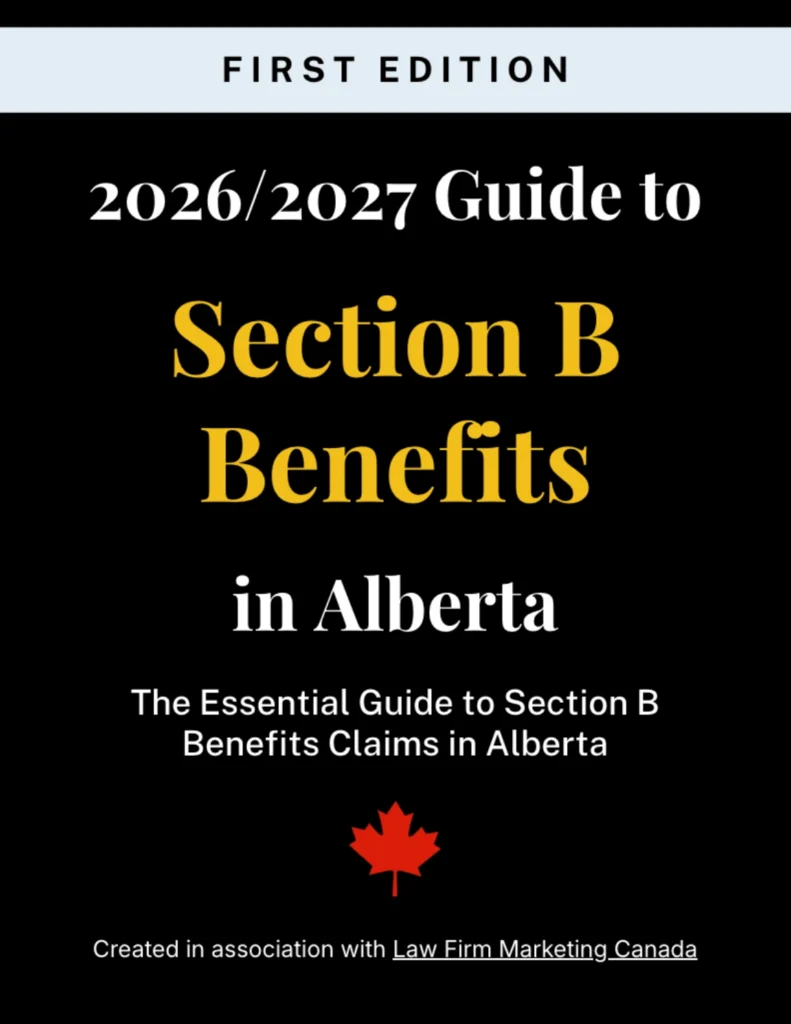
What You Will Learn in This Free Resource
Our comprehensive digital guide provides clear, practical information to help you access the benefits you are owed without delay. Inside the e-book, you will find:
- Covered Medical and Rehabilitation Services: A complete breakdown of covered treatments, including physiotherapy, chiropractic care, psychological counselling, prescription drugs, and medical equipment under the Diagnostic and Treatment Protocols Regulation.
- Weekly Income Replacement Provisions: How disability benefits function if your injuries prevent you from working, including eligibility criteria, weekly payment caps, and duration limits.
- Essential Filing Deadlines: Step-by-step guidance on completing Notice of Claim forms (Form AB-1) and medical reports (Form AB-2) within strict statutory timelines set by the Insurance Act (Alberta).
- Section B Benefits vs. Tort Claims: How primary accident benefits work alongside a third-party claim against an at-fault driver for full losses under the Contributory Negligence Act.
- Common Insurer Disputes and Denials: What actions to take if your insurance carrier terminates your benefits, orders an independent medical exam, or claims your recovery period has ended.
Download Our "Car Accident Claims in Alberta: A 2026 Guide" E-Book
Here’s an e-book you might find useful if you’re interested in learning more about how car accident claims work.
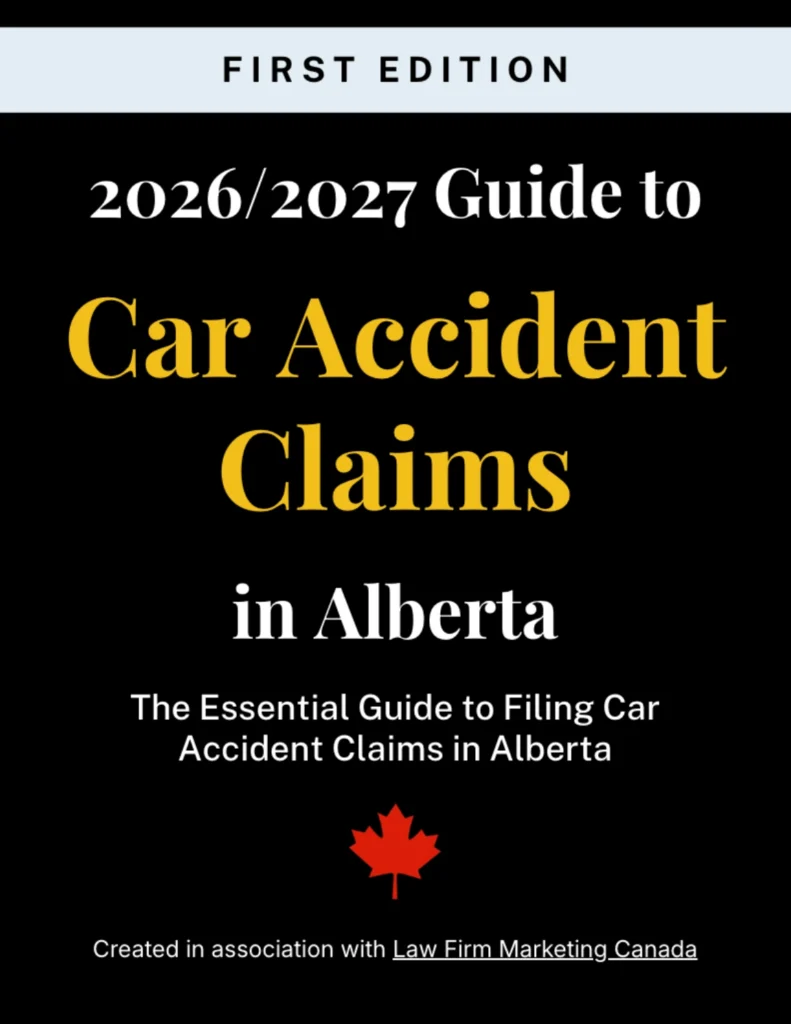
What You Will Learn in This Free Guide
Our legal team created this educational resource to help accident victims understand how provincial legislation applies to their situation. Inside this downloadable guide, you will find detailed insights into:
- Current Injury Claim Frameworks: How third-party tort claims allow injured individuals to seek compensation from negligent drivers for pain and suffering, lost income, and long-term care costs.
- Section B Accident Benefits: What immediate medical, rehabilitation, and disability benefits are available under standard automobile policies regardless of who caused the crash.
- The Alberta Minor Injury Regulation: How the statutory cap applies to soft-tissue injuries under the Minor Injury Regulation and which serious injuries exceed the cap.
- Important Collision Steps: Practical steps to take immediately following a crash to safeguard your physical health and preserve vital evidence.
- Common Insurance Pitfalls: What mistakes to avoid when speaking with insurance adjusters and why accepting an early settlement can compromise your claim.
Commonly Asked long-term disability Questions
Here are our most asked questions on long-term disability claims.
What is long-term disability?
Long-term disability claims arise when you have disability insurance, either through your work or privately, that denies your claim after you have become disabled.
Is there a time limit on when I can sue for long-term disability?
Yes. The Insurance Act, RSA 2000, sets a two-year limitation period that commences two years after the claims arise.
How much is my long-term disability case worth?
Long-term disability cases are several heads of damage that are assessed independently. First, there is the arrears or the past benefits that have not been paid. Next, there are potential future benefits. Finally, if a denial was made in bad faith, there may be extracontractual damages that can include aggravated damages or even punitive damages against the insurance company.
What types of compensation can I claim in a long-term disability case?
You can claim contractual damages for past benefits that should have been paid. In a settlement discussion, you can claim for future benefits that will be paid, but in a trial, you cannot make this claim. Finally, if the denial was in bad faith, you can make an extracontractual claim for aggravated damages and/or punitive damages.
What are the common causes of disability?
The most common causes of disability are related to chronic pain and psychiatric disorders like anxiety or depression. However, there are many causes of disability, including:
- Chronic pain;
- Depression;
- Anxiety;
- Brain injury;
- Stroke;
- Heart attack;
- Cancer;
- Injury;
- COVID;
- Stroke;
- Orthopaedic injury;
- Paralysis;
- And more.
What are my options if my long-term disability claim is denied?
The insurance company will provide you with options to appeal their decision. Keep in mind these appeal processes are usually created by the insurance company and adjudicated by the insurance company. And they do not stop the limitation period from running. Our lawyers will file a lawsuit instead and put the claim into the impartial realm of the court system.
What information is needed to support a long-term disability claim?
Copies of your policy, the denial letter, and your medical records are generally needed to support your long-term disability claim. Our lawyers can work with you to determine what documents exist and how to collect them to make sure nothing is missing.
When should a long-term disability lawyer be contacted?
If you have been denied long-term disability benefits, it is time to contact a lawyer to discuss next steps. Our consultations are always free, and there is no obligation to sign up.
Can a mental illness be considered a long-term disability?
Yes. Mental illness is increasingly being recognized as a real and problematic cause of disability for a substantial percentage of the population. In addition, these ailments are often invisible. Because of that, insurance companies will suggest that you have not met your burden to prove your mental illness exists and is disabling to deny your claim.
How is the Canada Pension Plan Disability different than a long-term disability?
The long-term disability claims we handle are from private long-term disability companies. Canada Pension Plan Disability is a statutory pension plan run by the Federal Government that you may or may not qualify for depending on your contributions to CPP and your injuries.
How is short-term disability different than long-term disability?
Short-term disability is similar to long-term disability but has a shorter waiting period to kick in and a shorter duration. Sometimes, the insurer or entity that pays short-term disability is different than the insurer that pays long-term disability. Since it is a different benefit, there is often some difference in the compensation formula between the two.
Do pre-existing conditions impact long-term disability claims?
Sometimes yes. Long-term disability contracts are often set up to have an exclusion for pre-existing conditions. These exclusion clauses typically only apply if you become disabled within the first year of coverage on most group policies. However, it is very important to read the specific language of your insurance policy if you have become disabled from a long-standing or pre-existing ailment.
FIGHTING FOR LTD BENEFITS IN LETHBRIDGE?
Book Your FREE Consultation
We stand up to insurance companies
We’ll review your case and explain your legal options when it comes to appealing a denial or termination of your benefits.